
Part One – The Road to Dar-ol-Elm: Early Accounts and Sketches
Introduction
European travellers and the commentaries of some of them about Hafiz, Saadi, and the land of Iran, throughout history, has triggered lots of foreigners to come to the region enduring abundant strains of travel along the way. And some of them have turned their own travel memoirs and observations into outstanding travelogues.
In the library of the University of Tehran’s Faculty of Literature and Humanities, a very precious series of the foreigners’ travelogues is available. A lot of these travellers have come to Shiraz and paid their tributes to the resting places of Hafiz and Saadi. Shiraz is also known with the epithet of Dar-ol Elm (“the abode of knowledge”), because back then it accounted for being the living place of numerous shaykhs, philosophers, and mainly the two aforementioned great poets.[1]
In the present article, there are hints of the sentiments and pieces of information of twelve of these persons regarding the two great Iranian poets. They have written their travel memoirs either in English or French. They were infused with intrigue and enthusiasm of analogy-drawing. Wherever they went, they documented names, and made drawings of the society at the time. Also, they made paintings of landscapes and constructs (upon their path). The group of visitors encompassed participants in a diversity (of careers) such as historians, painters, merchants, politicians, militants, writers and some other men of profession. In note-taking terms even, each personage acted differently: one kept observing and looked with a hard purpose-built perception. Another kept the self in the society of elders, hearkening to their wise words. Some other kept on a careless search without having the heart committed to the role.
Some of them were analogists, and it of course is a rather difficult job to take on, as true comparison demands correct (and clear) recognition of both sides of the discussion. Some others, though, simply literally noted down what their eyes merely inspected, and yet some went on putting down how they felt about it.
Each and every one of these people has got a separate special upbringing and profession that has caused the way of the travel to take on a sweet and humorous rhythm, and at times serious and solid. Also the recent globetrotters of this group have come with a prior knowledge over the literary and artistic oeuvres. They have put their own feelings in accordance with the original and either made acknowledgement of it or disregarded it, or applied corrections to it.
For these people, the amount of their liking of Shiraz influences their feelings about Saadi and Hafiz, and this liking is the result of the very first treatment and the very first demeanour they get in Shiraz. From their notes, this has been derived out that they better understand and better know Saadi and from Hafiz, they remember his regional reputation alone; only two of them prefer Hafiz over Saadi: “It should be remarked that all the travellers to Shiraz refer not only to the tomb of Hafez, but also to that of the other great poet, Saadi. Hafez is the most popular poet in Iran and most people know his poems by heart.”[2]; however, they, the travellers, all are on agreement that both of the poets have left such deep influence over the Iranian type of thinking and spirituality, and their poetry, speech, and thoughts are common amongst the ethnics and the diverse people of the society.
Now, each and every one of the travelogues, chronologically, will be pointed out. The offered excerpts of them are logically picked and the attempt made is more towards deriving out the essence of the authors’ original manuscripts in reflection. At the end, a list of the travelogues mentioned is collected.
I.
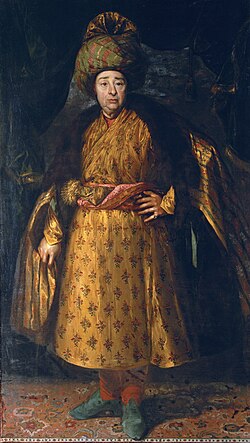
Jean-Baptiste Tavernier (1605-1689 CE) Persian Travels[1]: In addition to describing the city of Shiraz and its surroundings, Tavernier writes that there is an old mosque in Shiraz where Saadi is buried. The place, he says, must have once been dreamy in looks, as a school is situated beside it; however, it today like many other structures of the city has turned into rubble. Next to the mosque, he continues, there is a staircase at the end of which, if one climbs down, a spring will come to view that forms a lake of great width containing lots of fishes. Making contact with the fishes is considered a sin because it is said that Saadi’s soul is one with the fishes. As I have said in some other place, he proceeds, Iranians like erecting new structures better than attending to old mansions, regardless of how small the needs of their renovations are:
The Persians and Turks are of that bad humor, rather to build new Houses than to repair old Buildings. … The Custom is grown to that height, that the Children are so far from taking care to repair the old Houses where their Parents liv’d, that they will not so much as live in them after their decease, covetous of the honour of building Houses for themselves.[2]
Afterwards, Tavernier writes about the dervishes[3] around Shiraz, how peacefully they live and smoke their hookahs, and that they don’t raise themselves before anyone old and embody such particular pride and spiritual independence.
Then, he pinpoints that on the other side of Shiraz where the Sun sets, there is a cemetery with tall walls that in a corner of it, Hafiz’s grave[4] exists where is the place of worship and prayer for the dervishes. Tavernier knows Hafiz as quite a poet who has made his poetry in contemplation on wine:[5]
About a quarter of a league from the City, toward the West, is to be seen a Church-yard encompast with Walls; in the middle whereof, looking toward Mecca, stands a Monument very much frequented by the Dervis, and other devout people, who say their Prayers there, it being the Sepulcher of Hougia Hafiz, for whom they have a very great veneration. The year of his decease is set down upon his Tomb; being in the year 1381 AH (Islamic Calendar): and he purchas’d that great esteem among the Persians, for having compos’d a great Book of Morality, and for that he was also one of the best Poets of his time. He has left one great Poem behind him in the praise of good Wine; which has caus’d many to aver,[6] that Hougia- Hafiz was no good Mussul-man, in regard he has so highly prais’d a thing which is so strictly forbidd’n by the Law of Mahomet.[7]
II.
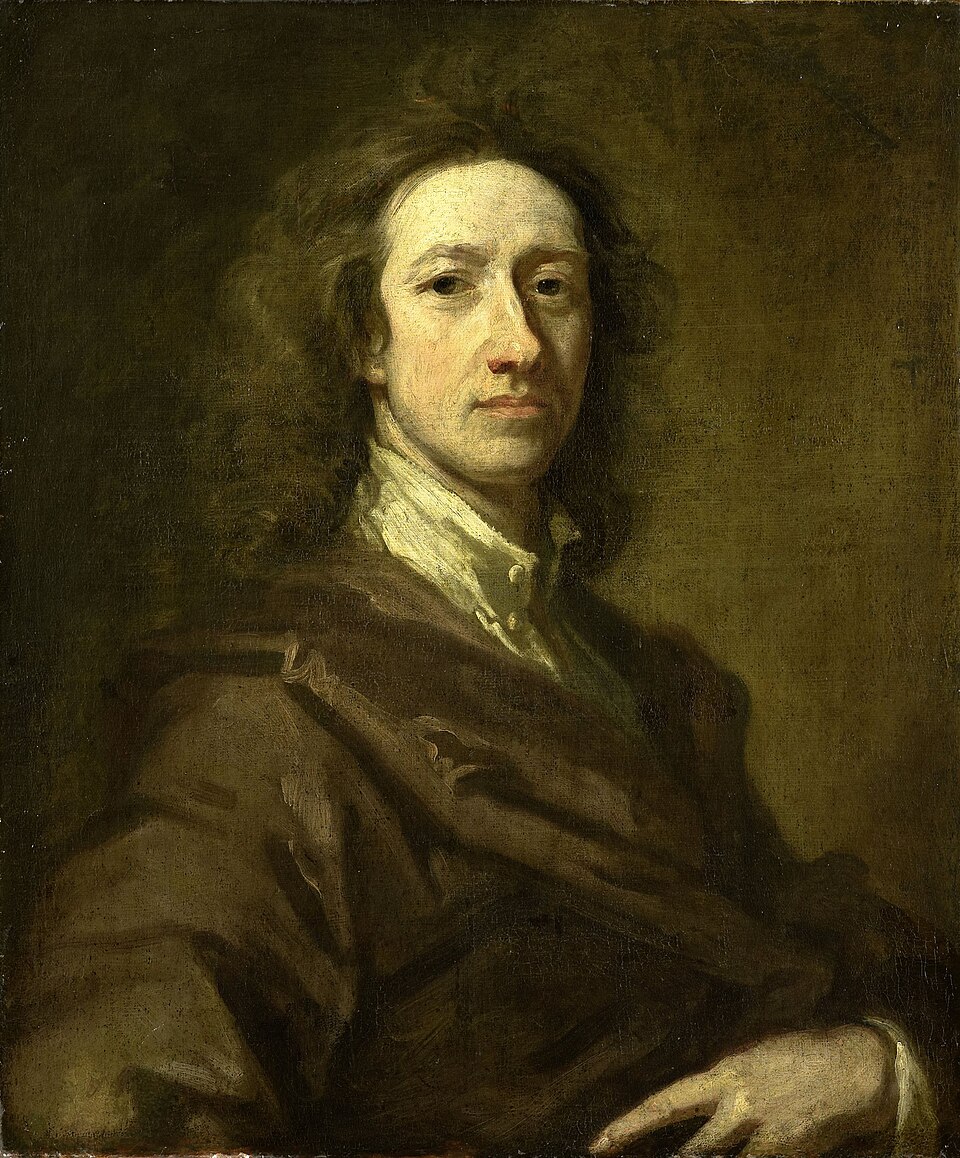
Cornelis de Bruyn (1652- 1726 CE) Travels[8]: This traveller describes the environs of Shiraz as exactly as they are; taken from its gravestones to the old planes, and even the growls of jackals and canines during the night:
… le Bruyn picture[s] the urban centre of Shiraz surrounded by suburban gardens that were related to the sources of water in the northern and western mountains, as well the area that extended along the river in the Jafarabad plain to the north of the river Koshk. This was probably the baghestan,literally place of gardens, mentioned in Zafarname.[9]
It is at this juncture that he says the tomb of the very first Iranian poets is in the vicinity of Shiraz (about a quarter of a league east of the city) and he means Saadi’s:
Le Bruyn depicts the mosques and other places of interest in a view drawn from the northern mountains, close to the tomb of Shaykh Saadi. It should be remarked that one of the main features of Shiraz was that there were numerous tombs and mausoleums inside the walls and in the extra moenia cemeteries.[10]
[1] In his first chapter, “Of the Extent of Persia, and its division into Provinces,” of the fourth book of The Travels of Monsieur Tavernier: Being, A Description of Persia, however, Monsieur Tavernier notes:
“… those Europeans that have Travel’d before me, either were not so curious, or had not perhaps the opportunity to learn the true number of the Provinces that compose the whole Continent of Persia, I have undertak’n, though the Persians themselves are ignorant enough,” Wikisource contributors, “The Six Voyages of John Baptista Tavernier/Persian Travels/Book 4/Chapter 1,” Wikisource , https://en.wikisource.org/w/index.php?title=The_Six_Voyages_of_John_Baptista_Tavernier/Persian_Travels/Book_4/Chapter_1&oldid=15327817.
[2]Jean-Baptiste Tavernier, The Six Voyages of Jean-Baptiste Tavernier, 31. https://quod.lib.umich.edu/e/eebo/A63439.0001.001/1:9.6?rgn=div2;view=fulltext.
[3]Dervish is “a member of the Muslim religious group, some of whom dance fast and spin around as part of a religious ceremony,” Longman Dictionary of Contemporary English, https://www.ldoceonline.com/dictionary/dervish.
[4] Jean-Baptiste Tavernier’s Les six voyages was the first work ever to mention Hafiz in French. The Encyclopaedia Irannica. https://www.iranicaonline.org/articles/hafez/hafez-xv-translations-of-hafez-in-french/#citation
[5]in contemplation on wine: Hafiz did not worship the liquor but he, in effect, used it as a source of spiritual inspiration for his own advantage in writing poetry.
[6] “To say something firmly and strongly because you are sure that it is true,” Longman Dictionary of Contemporary English, https://www.ldoceonline.com/dictionary/aver
[7]Jean-Baptiste Tavernier, The Six Voyages of Jean-Baptiste Tavernier, 250. http://name.umdl.umich.edu/A63439.0001.001.
[8] Travels into Muscovy, Persia, and Part of the East-Indies
9 Salma K. Jayyusi et al., The City in the Islamic World Vol. 2, 535.
[10] Salma K. Jayyusi et al., The City in The Islamic World Vol. 2, 532,
[1] Salma K. Jayyusi et al., The City in The Islamic World Vol. 2, 554.
[2] Salma K. Jayyusi et al., The City in The Islamic World Vol. 2, 540.

Leave a Reply