

Scholar of Middle Eastern and comparative literature, and professor of comparative literature at the City College of New York (CCNY) and the CUNY Graduate Center, John David Yohannan was born on May 10, 1911, during the reign of Ahmad Shah Qajar) in Dilman/Deylmaghan, Azerbaijan (the present Salmas in West Azerbaijan Province of Iran), into a Nestorian Christian family. His father, Hakim David Yohannan (Yokhanna), was an Assyrian from Salmas (Jalali-Moghaddam, p. 211) who, backed by American missionaries in Urmia, became the first Iranian student to travel to America in 1895, where he studied medicine at Western Reserve University in Cleveland, Ohio, and obtained U.S. citizenship (Elder, pp. 3–16; Hajianpur and Khamoshi, pp. 19–44; Gourgis, p. 90; see also Baaba, p. 114). He eventually returned to his birthplace, Urmia, and after establishing his medical practice, married Mary (Miriam) Yaouvre, the eldest daughter of a well-traveled carpet merchant, in 1909 (1288 AP). They had five children, of whom Lewis, John, and Helen survived infancy (Baaba, p. 137). With the outbreak of the First World War, the weakness of the central government, rising ethno-religious tensions, Christian fears of Ottoman incursions into Iran’s borders, and the massacre of Assyrians led by Ismail Agha Simko (Tatari and Nikbakht, pp. 31–55), Miriam and her three young children fled first to Tabriz and then to Tiflis (Tbilisi) to escape the turmoil. However, upon the withdrawal of Russian troops from northern Iran, the worsening situation, and despite British warnings that “casualties on the road will be heavy,” the family joined a throng of Assyrians and other religious minorities on a forced exodus. Amid the flight from Salmas, suffering from dysentery, acute medicine shortages, widespread famine, and the callous indifference of British officers toward the refugees—an account detailed in Yohannan’s mother’s diaries (See Baaba, pp. 174–96)—the father died in 1918 in Bijar (near Hamadan). Left with little choice, his widow immigrated to the United States with her three children via Baqubah (in Mesopotamia), Bombay, and England (Ibid., p. 126–115; see also Yohannan, National Portal, 2001).
John spent his childhood in the states of Michigan (Flint), New Jersey, and New York (Yonkers and New York City), attending public schools. While no documentation survives regarding his school years or how he acquired Persian, his fluency in Persian, Assyrian, and English leaves little doubt that he learned these three languages from his mother. Miriam was proficient in all three and, in addition to writing her harrowing memoir of the exodus from Iran, translated her ancestors’ travelogue—authored by Qasha (priest in Assyrian/Syriac) Yaqoub Yauvre and Moursa Malek David—from Assyrian to English for presentation to the British court in 1948. According to Miriam, Mourassa Malek David was the first Iranian woman literate in English (Baaba, pp. 11, 143). In 1935, John graduated with honors from the City College of New York and was elected to Phi Beta Kappa (ibid., p. 143). In 1939, he completed his master’s degree at Columbia University with a thesis on Hafez in England and America (Naby, 2017; Baaba, p. 143; see also Yohannan, National Portal, 2001).
In 1947, John earned his Ph.D. in literature from New York University with a dissertation on Persian Poetry in England down to the Time of FitzGerald.
For nearly forty years—with a brief hiatus during World War II when he served three years (1943–1946) in the U.S. Army Air Forces Intelligence branch—Yohannan taught and conducted literary research at the City College of New York and the Graduate Center of the City University of New York (CUNY), playing a pivotal role in establishing the comparative literature program there. His academic career was marked by notable honors, including a Blumenthal Fellowship from New York University (1941), a Ford Foundation Fellowship (1954), a Fulbright Lectureship at the Universities of Thessaloniki and Athens in Greece (1958–1960), and a visiting professorship at Waseda University in Tokyo, Japan (1963), all of which broadened his scholarly pursuits in comparative studies and world literature (Yohannan, National Portal, 2001).
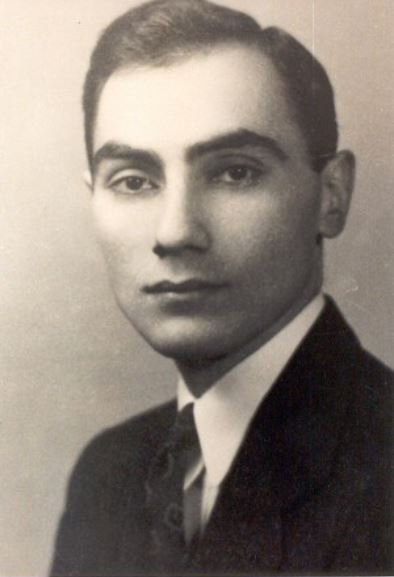
In 1943, Yohannan married Catherine Parandes, a woman of Greek descent from Hartford, Connecticut, with whom he had two sons, Timothy (1945–1998) and Thomas (1952–2020). He attained professor emeritus status from the City University of New York in 1976 and passed away on April 4, on the threshold of his ninetieth year, at his residence in Haddam, Connecticut. John Yohannan never returned to Iran, yet as evidenced by his works, he perpetually inhabited the realm of Persian cultural space, never forgetting his homeland and birthplace. The only substantial memorial essay concerning him was penned by his son, Thomas Yohannan, and published on the World Assyrian website (Yohannan, op. cit.).
Works and Publications
Yohannan’s scholarly output spans a vast domain. Persian Poetry in England and America: A Two Hundred Year History (1977), which grew out of his master’s thesis written three decades earlier, is a foundational text. Though primarily descriptive and bibliographical, it remains one of the earliest systematic investigations into the adaptation and manifestation of Persian literature in the Anglophone world. Relying on bibliographical sources, translations, and the writings of Western Orientalists, Yohannan demonstrates how Persian literature gradually entered the intellectual and aesthetic horizon of Britain and America from the eighteenth century onward. The book’s strengths lie in its rigorous historical approach, its attention to the role of translation in shaping the “image of Iran” in the Western mind—particularly his analysis of FitzGerald’s translations of Khayyam and their impact on Romantic and Victorian sensibilities. Ahmad Tamimdaray translated this work into Persian under the title Gostareh-ye She’r-e Parsi dar Engelestan va Amrika [گسترهٔ شعر پارسی در انگلستان و آمریکا].
Among his other contributions are the editing of the CCNY comparative literature syllabus in 1963 and the authorship of several textbooks in comparative and Oriental literature, notably A Treasury of Asian Literature (1956), which was later reprinted under the title Literature of the Eastern World within Grolier’s “Classics of the World” series and served as a university textbook for decades. Through selections from Iranian, Arabic, Indian, and other Asian cultural traditions, Yohannan sought to present a broad panorama of the East’s aesthetic and intellectual diversity. The book’s merits reside in its judicious text selection and illuminating introductions that acquaint the uninitiated reader with the historical and cultural contexts of the works, with a distinct emphasis on Persian poetry and its standing in the Asian literary tradition.
Another major study, Joseph and Potiphar’s Wife in World Literature: An Anthology of the Story of the Chaste Youth and the Lustful Stepmother (1958), is a comparative investigation into the continual metamorphosis, rewriting, and interpretation of the “Joseph and Zulaikha” narrative across global literary traditions. Its scope ranges from Jewish, Christian, Islamic, and Buddhist sacred texts to Greek drama and Persian poetry—namely the Siyavash and Sudabeh episode in Ferdowsi’s Shahnameh and Jami’s mystical-allegorical Yusof o Zulaikha—as well as European novels such as Thomas Mann’s Joseph and His Brothers (1943). Yohannan later addressed this tetralogy extensively in an article titled “Hebraism and Hellenism in Thomas Mann’s Story of Joseph and Potiphar’s Wife” (1982). By deeply reading the tension between chastity and temptation, beauty and destiny, and the dialectic of religious law (sharia) and mysticism (irfan) in these texts, and by comparatively analyzing the versions, Yohannan illustrates how each culture re-reads this archetype in light of its own pressing concerns. This book remains a guiding methodological reference for intercultural studies of shared narrative patterns in world literature.
In 1978, New Writing from the Middle East, co-edited by Yohannan and Leo Hamalian, marked a significant departure from classical literature toward contemporary voices. This collection gathers “contemporary” Middle Eastern fiction focused on emerging regional themes and voices tailored for the Anglophone reader: the lived experiences of war, exile, identity, modernity, and the friction between tradition and social change. By selecting “living” authors from diverse linguistic and cultural backgrounds, the volume presents a polyphonic portrait of Middle Eastern literature that captures the region’s human and historical complexities. In the section dedicated to Iran, Yohannan and Hamalian brought together previously scattered English translations of works by Sadeq Hedayat, Bozorg Alavi, Houshang Golshiri, Masud Farzad, Sohrab Sepehri, Forough Farrokhzad, Ahmad Shamlou, Gholam-Hossein Sa’edi, and Reza Baraheni, alongside writings from four other linguistic spheres of the Middle East—Arabic, Armenian, Hebrew, and Turkish (cf. Kritzeck, p. 390).
Yohannan also served for over thirty years on the editorial board of the New York-based The Literary Review (Eastern and Western literature) (idem, 2001). A legacy of articles and reviews remains from his pen, including:
- “Tennyson and Persian Poetry” (Modern Language Notes, 1942)
- “Emerson’s Translations of Persian Poetry from German Sources” (American Literature, 1943)
- “Did Sir Richard Burton Translate Sadi’s Gulistan?” (Journal of the Royal Asiatic Society, 1950)
- “The Persian Poetry Fad in England, 1770-1825” (Comparative Literature, 1952)
- “Teaching Persian Literature in English Translation” (Middle East Studies, 1962)
- As well as two entries in the Encyclopædia Iranica: “Persian Influences in English and Western Literature” and “Emerson, Ralph Waldo” (see Yohannan, 1998).
The final published work of Yohannan is The Poet Sa’di: A Persian Humanist (1987), hailed by Michael Beard as “an introductory and foundational book” for better understanding Sa’di’s counsels, aphorisms, and fragments, the themes rooted in Iranian culture, his effortless yet inimitable style (سهل ممتنع), and his universal concepts (1988, p. 142). Other scholars have praised its comparative structure and its treatment of the history of European translations of Sa’di (see Hanaway, pp. 92–93; Sandler, p. 160). In this volume, explaining Western reticence toward translating Sa’di’s ribald verses (خبیثات), Yohannan undertook to translate these poems himself, leaving the moral judgment of their “malignancy” to the reader (p. 11).
References
- الدر، جان، تاریخ میسیون امریکائی در ایران، ترجمهٔ سهیل آذری، تهران، 1333؛
- جلالیمقدم، مسعود، «آسوریان»، دانشنامهٔ بزرگ اسلامی، ج 1، تهران، چ 1، 1367؛حاجیانپور، حمید، خاموشی، موسی، «میسیونرهای امریکایی و فعالیت در میان نسطوریان ارومیه و روستاهای اطراف آن ( 1843-1835 م/1251-1259ق»، جستارهای تاریخی، س7، ش2، پاییز و زمستان 1395؛ططری، علی، نیکبخت، رحیم، تحوّلات غرب آذربایجان به روایت اسناد مجلس شورای ملّی: دورههای سوّم تا پنجم، تهران،1390ش؛گورگیز، هانیبال، تاریخچهٔ دانشکدهٔ پزشکی ارومیه 1260-1297، تهران، بیتا؛
- یوحنّان، جان دی.، گسترهٔ شعر پارسی در انگلستان و آمریکا، ترجمهٔ احمد تمیمداری، تهران، 1385؛
- Baaba, Y.A., An Assyrian Odyssey, CA, 1998;
- Beard, M., “Review: The Poet Sa’di: A Persian Humanist by John D. Yohannan”, Middle East Journal, 42/1, Winter 1988, p. 141-142;
- Hanaway, L. “Review: The Poet Sa’di: A Persian Humanist by John D. Yohannan”, Iranian Studies, 22/1, 1989, p. 92-93;Kritzeck, J., “New Writing from the Middle East by Leo Hamalian; John D. Yohannan”, Middle East Journal, 33/3, Summer 1979), p. 390;Naby, E. “Yohannan, Abraham”, Encyclopaedia Iranica, August 28, 2017, https://www.iranicaonline.org/articles/yohannan-abraham/;
- Sandler, R. “Book Reviews: John D. Yohannan, The Poet Sa di: A Persian Humanist, Persian Studies Series, No. 11 (Lanham, Md.: University Press of America, 1987). p. 160”, International Journal of Middle East Studies , 21/4, November 1989, p. 590 – 591;
- Yohannan, J.D., “About 4000 Years Ago: Theodor H. Gaster’s The Oldest Stories in The World”, New York Times Book Review, Dec 28, 1952, p. 6;Yohannan, J.D., “Did Sir Richard Burton Translate Sadi’s Gulistan?”, Journal of the Royal Asiatic Society, Oct 1950, p. 185-188;
- Yohannan, J.D., “Emerson’s Translations of Persian Poetry from German Sources”, American Literature, XIV/4, Jan 1943, p. 407-420;Yohannan, J.D., “Hebraism and Hellenism in Thomas Mann’s Story of Joseph and Potiphar’s Wife”, Comparative Literature Studies, 19/4, Winter 1982, p. 430-441;Yohannan, J.D., “Joseph in Egypt and Elsewhere”, East-West Review, Kyoto, Japan, I/3, Winter 1965, p. 254-270;
- Yohannan, J.D., “One Hundred Years of FitzGerald’s Rubaiyat of Omar Khayyam”, EPETIRIS, University of Athens, Greece, 1960, p. 259-274;
- Yohannan, J.D., “Review of Poetry of Asia: Five Millenniums of Verse in Thirty-Three Languages, ed. Keith Bosley, Wetherhill, 1979”, Journal of the American Oriental Society, 1982, p.152;
- Yohannan, J.D., “Teaching Persian Literature in English Translation”, Middle East Studies, IV/1, Fall 1962, p. 6-8;
- Yohannan, J.D., “Tennyson and Persian Poetry”, Modern Language Notes, LVII/2, Feb 1942, p. 83-92;
- Yohannan, J.D., “The Fin de Siècle Cult of FitzGerald’s Rubaiyat”, Iran Number, Review of National Literatures, ed. Javad Haidari, II/1, Spring 1972, p. 74-91;
- Yohannan, J.D., “The Influence of Persian Poetry upon Emerson’s Work”, TBID, XV/1, March 1943, p. 25-41;
- Yohannan, J.D., “The Persian Poetry Fad in England, 1770-1825”, Comparative Literature, IV/2, Spring 1952, p. 137-160;
- Yohannan, J.D., “There Was a Lot of Wit in Omar: Arthur J. Arberry’s Omar Khayyam: A New Version”, New York Times Book Review, May 11, 1952, p. 4;
- Yohannan, J.D., “Thomas Mann’s Joseph in Egypt as a study in Comparative Literature”, Annuaire de Literature Comparée, I, 1965, Waseda University, Tokyo, Japan, p. 257-267;Yohannan, J.D., “Whitman and Mysticism, Section 2, V. K. Chari’s Whitman in the Light of Vedantic Mysticism”, New York Times Book Review, May 26, 1966, p. 5;
- Yohannan, J.D., A Treasury of Asian Literature, N.Y., 1956;
- Yohannan, J.D., Hamalian, L., New Writing from the Middle East, N.Y., 1978;
- Yohannan, J.D., Joseph and Potiphar’s Wife in World Literature, N.Y., 1968; Yohannan, J.D., Persian Poetry in England and America: A Two Hundred Year History, N.Y., 1977;
- Yohannan, J.D., The Poet Sa’di: A Persian Humanist (Persian Studies Series, No. 11) Lanham, Md., 1987;
- Yohannan, T. (son), “John D. Yohannan (1911-1997)”, Assyrian Information Management, 2 July 2001 <https://www.atour.com/people/20010702e.html>;

Leave a Reply