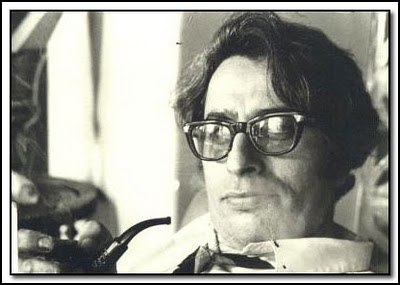
Two Poems by Nosrat Rahmani

Nosrat Rahmani (March 1, 1930–June 16, 2000) stands among the most restless and resonant voices of Iranian modern poetry—a wanderer between the classical cadence of the quatrain [چهارپاره] and the freer, fractured rhythm inspired by Nima Youshij. Born in the narrow alleys of Tehran to a mechanic father who loved verse, Rahmani carried both the smell of the workshop and the sound of poetry in his earliest breaths. His education in ordinary schools and chance tutelage at the School of Post and Telegraph set him on a lifelong course: to weigh words as one might weigh spare parts—by their balance, force, and necessity.

From the very start, Rahmani was drawn to society’s margins—to the drifters, the intoxicated, the sleepless. His first collection, Migration (1954), announced him as a poet unafraid to stain beauty with reality. He wrote with a kind of cinematic clarity about forbidden love, defiance, and inner decay. Critics praised his authenticity, his ability to turn the city’s grime into revelation. Yet Rahmani was never a political bard; his rebellion was sensual, existential. He disturbed decorum rather than governments. As decades passed, his verse deepened with fatigue and grace. Collections like Rendezvous in the Muck (1967), and Fire in the Wind (1970) marked his transition to Nimaic poetry—broken lines mirroring a fractured world. Later works, such as Sword, the Mistress of the Pen (1989), carry the weary music of a man who had seen beauty burn and still wrote to name its ashes.

Rahmani died in Rasht, far from Tehran’s clamor, yet his voice endures—quiet, stubborn, and tender. In his poems, Iran’s modern soul breathes: wounded, self-aware, reaching for redemption through the very words that reveal its ruin. Here you can read two poems by Nosrat Rahmani – translated into English from original Persian:

1

I am no fatigued

For long my fatigue

Has been altered into annihilation.

I am no fatigued

I am annihilated;

Is this not a great hope?


2

And at nightfall

Like the mass of shadows

In the sweltering blackness

We were vaporising.

In nightly roams

On vaporous, outlying roads

Like the dead leaves of fall

In trails of each other

We were chained.

Under the feet of drunken passing moments

We were surrendered, were trampled

We have perished.

With our tears

We were maligning the eternity of suffering,

With our suffering

Calumny to love.

Alienation was our calling.


Photo reference: Encyclopedia Iranica, AI-enhanced


من خسته نیستم

دیریست خستگی ام

تعویض گشته است به درهمشکستگی.

من خسته نیستم

درهمشکسته ام

این خود امید بزرگی نیست؟

و شب هنگام

چون جرم سایه ها در هرم تیرگی تبخیر میشدیم

در پرسه های شبانگاهی

بر جاده های پرت مه آلود

چون برگهای مرده ی پاییز

دنبال یکدیگر

زنجیر می شدیم

در زیر پای رهگذر مست لحظه ها

تسلیم می شدیم، لگدکوب می شدیم

نابود می شدیم

با اشکهایمان

تهمت به جاودانه گی درد می زدیم

با دردهایمان

بهتان به عشق.

بیگانه گی رسالت ما بود

About Nasrin Reshadi 4 Articles
Nasrin is a graduate of English Literature, and an art graduate with a specialisation in film production and film theory now based in the Netherlands.

Be the first to comment

Leave a Reply

Your email address will not be published.


*


This site uses Akismet to reduce spam. Learn how your comment data is processed.